

I join the Monday call two minutes early. The tiles fill in. Sarah, a CTO I coach. Her VP of Engineering. Me. Then the rest of the attendee list loads. Otter. Fireflies. Granola. Zoom’s AI Companion. A bot politely named after Sarah’s executive assistant.
Three humans. Five note takers.
We are outnumbered by our own memories.
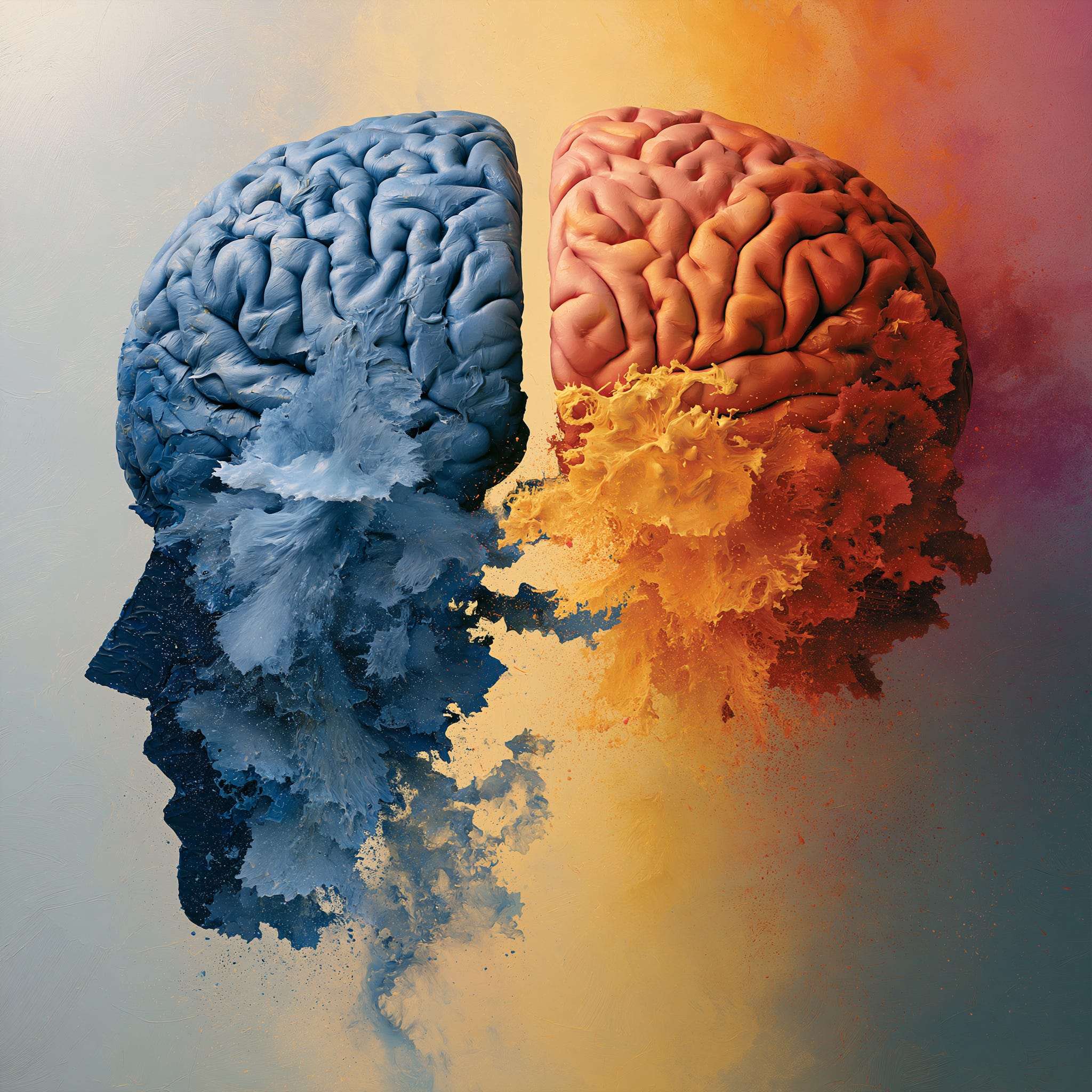
Nobody comments on it anymore. The bots slid into our meetings the way phones slid onto our dinner tables, and we all made the same silent agreement to pretend it’s normal. Every sentence spoken on this call will be transcribed three times, summarized five ways, and filed into vaults, wikis, and CRMs before we say our goodbyes. We are all frantically collecting. Building the so-called second brain, one meeting at a time.
Three weeks later, Sarah opens our next session with, “So I did what we agreed on last time.”
And I have nothing. I’m smiling and nodding while my mind sprints down empty hallways. I have three transcripts of that call. I have a summary with the action items in bold. What I don’t have is the memory. I attended that meeting.
My tools attended it harder.
The vault I told you to build
The second brain promise traces back, more or less, to David Allen, who built Getting Things Done on the idea that your mind is a lousy office and a worse filing cabinet, so you should get everything out of it and into a trusted system. Fair enough, for tasks. Then the note-taking world picked it up and turned it into the founding promise of a movement. Build a second brain. A place outside your head where all your knowledge lives, captured and organized and searchable. Free your first brain for the good stuff. The having of ideas. The thinking.
I believed it. Two years ago I wrote a piece called The CTO’s Hidden Notebook and told you to believe it too. I described my conversion at 35,000 feet, the folder structure, the linking, the beautiful painting of my brain.
I still stand behind half of that article. The half about elaboration, about writing your way to understanding, holds up. The capture half is the part I need to come clean about. Because after the Priya call, I did what any good engineer does when a system underperforms. I blamed my implementation. More plugins. Better tagging. More note takers in more meetings, on the theory that the vault wasn’t working because it wasn’t complete. The vault grew. My recall of what was in it did not. I was maintaining a reference library that referenced nothing, and feeling guilty about it the way you feel guilty about a gym membership.
The guilt was misplaced. I wasn’t failing at the system. The system is built on a picture of the brain that is wrong.
Pipes, clocks, wires, drives
The picture is your brain as a hard drive. Memories are files. Files take up space. Space is limited and unreliable, which you know, because you forget things. So the smart move is to migrate the files off the aging, leaky drive and onto external storage that’s bigger, permanent, and searchable.
It’s such a natural picture that it doesn’t feel like a metaphor. It feels like a description.
It’s a metaphor. And it’s the latest in a long, humbling line of them. Every era reaches for its most impressive technology to explain the brain, and every era turns out to be wrong.
The ancients described thought as fluid moving through the body.
Descartes looked at the water-driven automata in the royal gardens and described nerves as pipes and the brain as a pump.
When Europe filled with clocks, the brain became clockwork.
The telegraph arrived and the nervous system became wires.
Then the switchboard.
Then, in our lifetime, the computer, with its input, processing, storage, and retrieval.
Each metaphor felt obvious to the people using it. Each one was the shape of the newest machine, pressed onto the oldest mystery. Each one was eventually set down.
We’re living inside the computer one, which is why it’s so hard to see as a choice. But the science we actually have says memory does not work like storage and retrieval, and it hasn’t for a long time.
Frederic Bartlett demonstrated this in the 1930s at Cambridge. Give people a strange story to remember and they don’t play it back, they reconstruct it, reshaping it toward what makes sense to them, drifting further with each retelling.
Memory is not a recording. It’s an act. When you remember something, you are not opening a file. You are rebuilding the thing, in the moment, out of fragments and patterns and the state you’re in right now.
Now follow the consequence, because it’s the whole point. If a memory is not a file, if it’s a pattern in your tissue that gets rebuilt each time you use it, then there is nothing to move to external storage. There is no file to drag off the drive. You can write a note about the memory. You can leave yourself a cue that helps you rebuild it later. But the note is not the memory, any more than a photograph of a friend is the friend.
Knowledge isn’t a thing you hold. It’s a thing you do.
The receipt is not the meal
The honest objection arrives on schedule. Isn’t the brain genuinely bad at storage? Yes. Obviously. But that’s beside the point. Storage was never the job. The job of memory is to let you recognize, generalize, predict, and act. Calling the brain bad at storage is like calling a river bad at being a lake.
The research here is not subtle, and it did not start with AI.
In 1992, UCLA memory scientists Robert and Elizabeth Bjork drew a distinction that should be required reading for every knowledge worker. A memory has storage strength, how well-learned it is, and retrieval strength, how easily you can summon it right now. The two are not the same, and their relationship contains a trap. The Bjorks found that the easier something is to retrieve in the moment, the less durable learning you gain from encountering it again. Effortless access produces almost no learning.
The struggle to recall is not a bug in the process. The struggle is the process.
In 2011, Betsy Sparrow, Jenny Liu, and Daniel Wegner published a study in Science on what they called Google effects on memory. When people expected information to remain accessible later, they recalled the information itself worse and remembered where to find it better. The brain, sensing a reliable external partner, quietly reassigns the job. It stops storing the what and starts storing the where.
In 2014, Linda Henkel led students through an art museum and found that the ones who photographed the objects remembered fewer of them, and fewer details about them, than the ones who simply looked. She called it the photo-taking impairment effect. The camera captured everything. The photographers retained less. And the detail I can’t stop thinking about is this: when participants zoomed in on a specific feature of an object, the impairment disappeared. Attention repaired what outsourcing had broken.
Swap the camera for a meeting bot and tell me the experiment isn’t running in your calendar right now.
The newest data point is rougher but hard to ignore. In 2025, researchers at the MIT Media Lab monitored people writing essays with ChatGPT, with a search engine, or with nothing but their own heads. The ChatGPT group showed the weakest neural connectivity of the three, and 83% of them could not accurately quote from essays they had written minutes earlier. Their own essays. Minutes earlier. It’s a preprint with 54 participants and it has taken methodological criticism, so hold it loosely. But notice how neatly it rhymes with everything from Bartlett forward. The pattern across seven decades of research points one direction. When the tool does the remembering, you don’t.
Every time you tell yourself the note is the memory, you skip the part that would have made it one.
The five uncomfortable seconds of putting the idea in your own words. The effort of connecting it to something you already know. Capture lets you skip that work and feel like you didn’t.
You get the receipt and skip the meal, and then you wonder why you’re still hungry.
The closed-book exam
Why does this matter to you more this year than it did two years ago? Because capture just became free. The note takers outnumber the humans now, and every meeting ends with the warm feeling that it’s all handled.
Meanwhile, consider when your knowledge actually earns its keep. A board member interrupts your slide to ask why infrastructure spend is up 40%. Your CEO turns to you mid-negotiation and asks what the migration really costs. An engineer challenges an architecture decision in front of the team.
Every moment that defines you as a CTO is a closed-book exam.
Your vault is not in the room. Your transcripts are not in the room. What’s in the room is your retrieval strength, the one thing none of your tools have been building, the thing Sparrow’s research says the capture habit has been quietly reassigning away.
We are the first generation of technology leaders who can outsource remembering entirely, at the precise moment our jobs still depend on the one thing that can’t be outsourced.
Try the blank page first
I’m not going to tell you to delete your vault or kick the bots out of your meetings. Mine are still there, and the elaboration practice I described in The Hidden Notebook is still how I write. What changed is what I ask the vault to be. It’s a cue library now, not a warehouse. In practice, that looks like this.
After my next important meeting, before I open the AI summary, I take a blank page and write down what I remember. The decisions, the tensions, the thing someone almost said. Then I open the transcript and compare. The gap between the two pages is not a failure. It’s a map of what I actually know versus what I merely attended. This is Henkel’s zoom lens, applied to a Tuesday.
Once a day, I take one thing a bot captured and rewrite it in my own words, connected to something I already believe or something I recently got wrong. One note. Five minutes. The meal, not the receipt.
And when I need to recall something, I try before I search. Thirty seconds of reaching for it. The Bjorks’ research suggests the reaching is precisely what builds the strength. Then I search, and the note confirms or corrects me.
I’ll be honest about what to expect. This feels slower. It feels worse. The capture habit feels like progress because it’s frictionless, and this feels like friction because it is. But you already know, from every system you’ve ever scaled, that the work you defer doesn’t disappear. It compounds. The remembering you’ve been deferring to your tools has been compounding too, and the interest comes due in the rooms where your judgment is the product.
Your brain is for having ideas. It turns out it was holding them all along. Nothing else ever was.
So, with the laptop closed, what do you actually know?
Sources: Bjork, R. A. & Bjork, E. L. (1992), “A New Theory of Disuse and an Old Theory of Stimulus Fluctuation”; Sparrow, B., Liu, J. & Wegner, D. M. (2011), “Google Effects on Memory: Cognitive Consequences of Having Information at Our Fingertips,” Science 333; Henkel, L. A. (2014), “Point-and-Shoot Memories,” Psychological Science 25; Kosmyna, N. et al. (2025), “Your Brain on ChatGPT: Accumulation of Cognitive Debt When Using an AI Assistant for Essay Writing Task,” MIT Media Lab preprint, arXiv:2506.08872; Bartlett, F. C. (1932), Remembering: A Study in Experimental and Social Psychology.
Great post, really captivating read!
Wonderful post. Makes me wonder about the impacts on organizational learning and recall while remembering and documentation is being increasingly outsourced to AI. How do you think this mechanism affects the entire engineering function?